The answer is simple. A wedding invitation is not just information. It is respect. In this guide, we share the real reasons to prefer traditional wedding cards over digital invitations. We also explain where digital invites work well. By the end, you will know exactly what suits your wedding. This guide is for couples, and it is just as much for the parents who are planning with them.
What Are Traditional Wedding Cards?
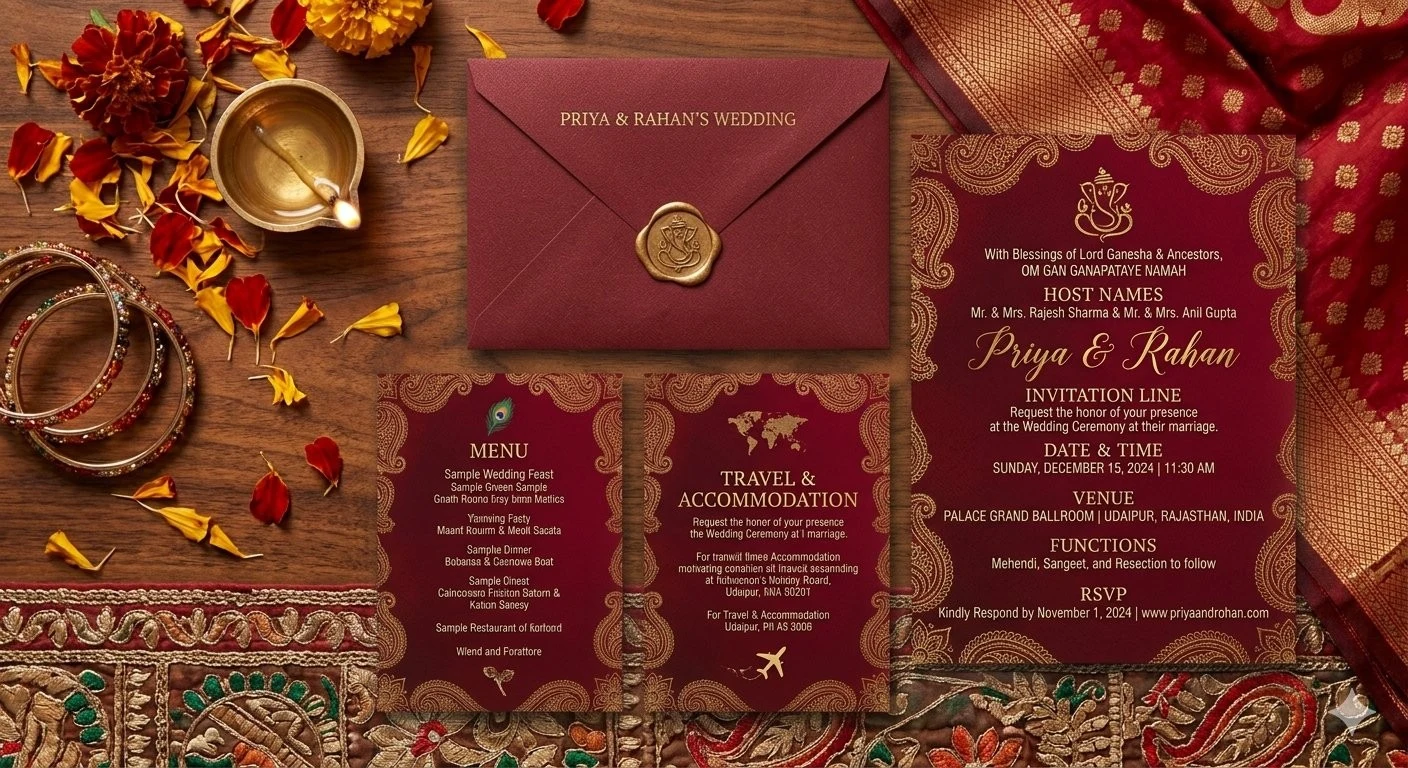
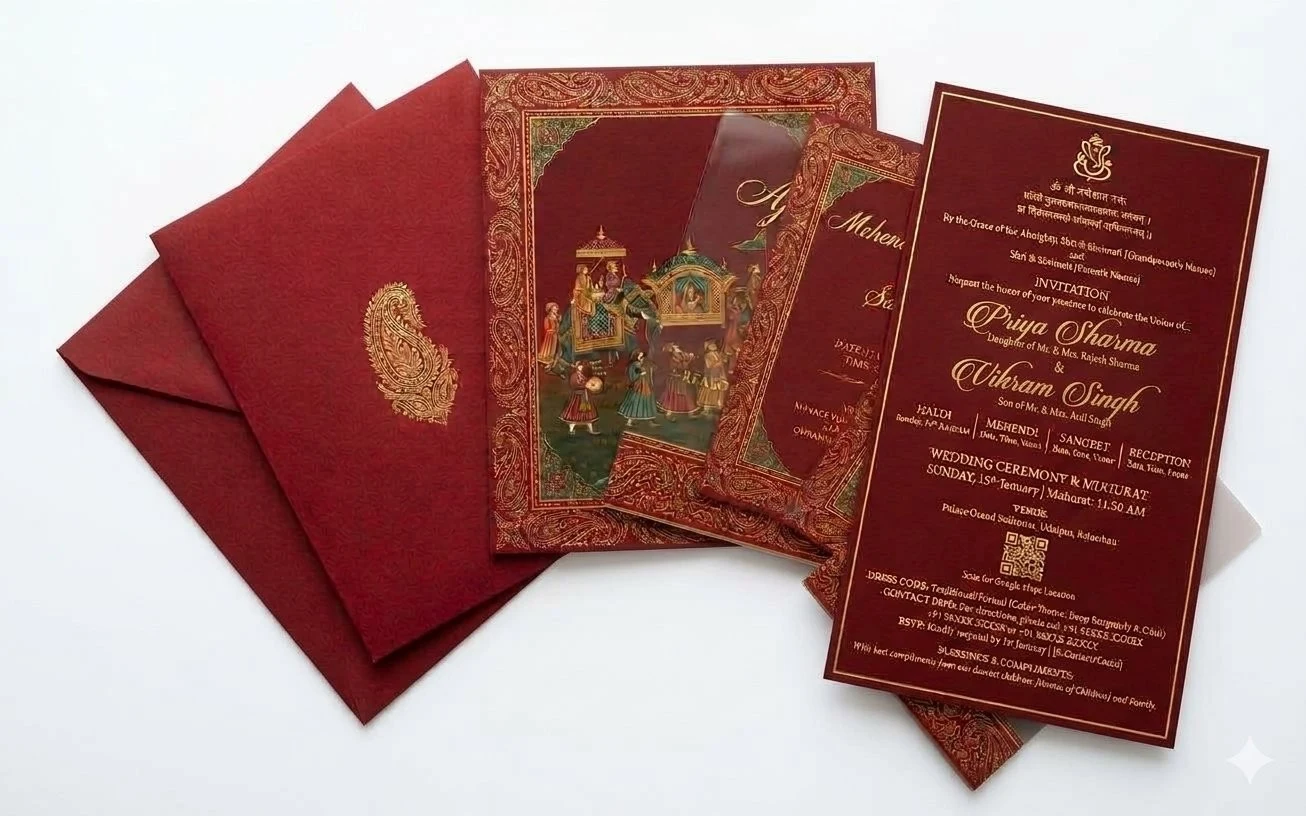
Traditional wedding cards are printed invitations that you hand over or send to your guests. In India, they are much more than a piece of paper. A typical traditional card includes:
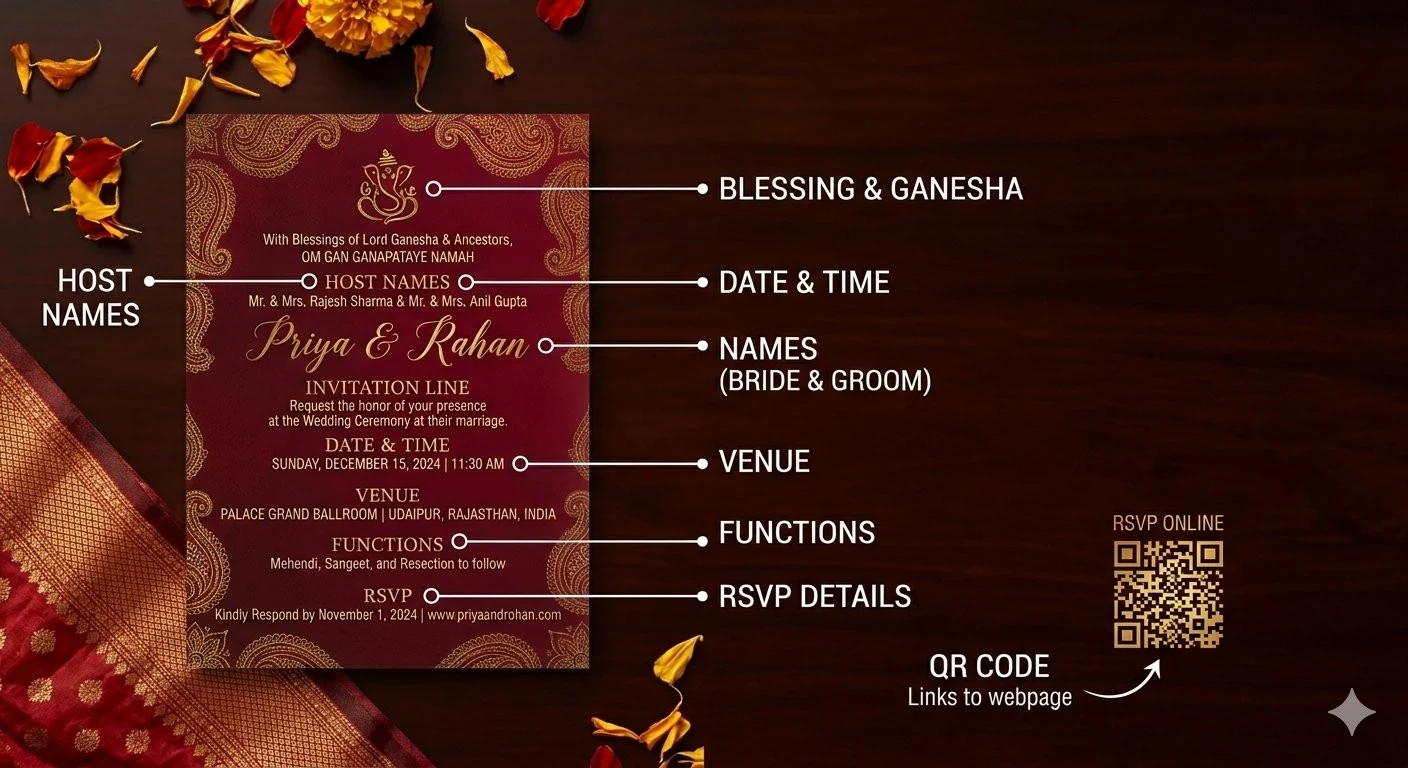
- The main card with the names of the bride and groom, the date, the venue and the family names.
- Insert cards for each function, such as Haldi, Mehendi, Sangeet, Wedding and Reception.
- An envelope or box, often with the guest's name written or printed on it.
- A religious symbol, such as Lord Ganesha, a Kalash or a Swastik, as per family tradition.
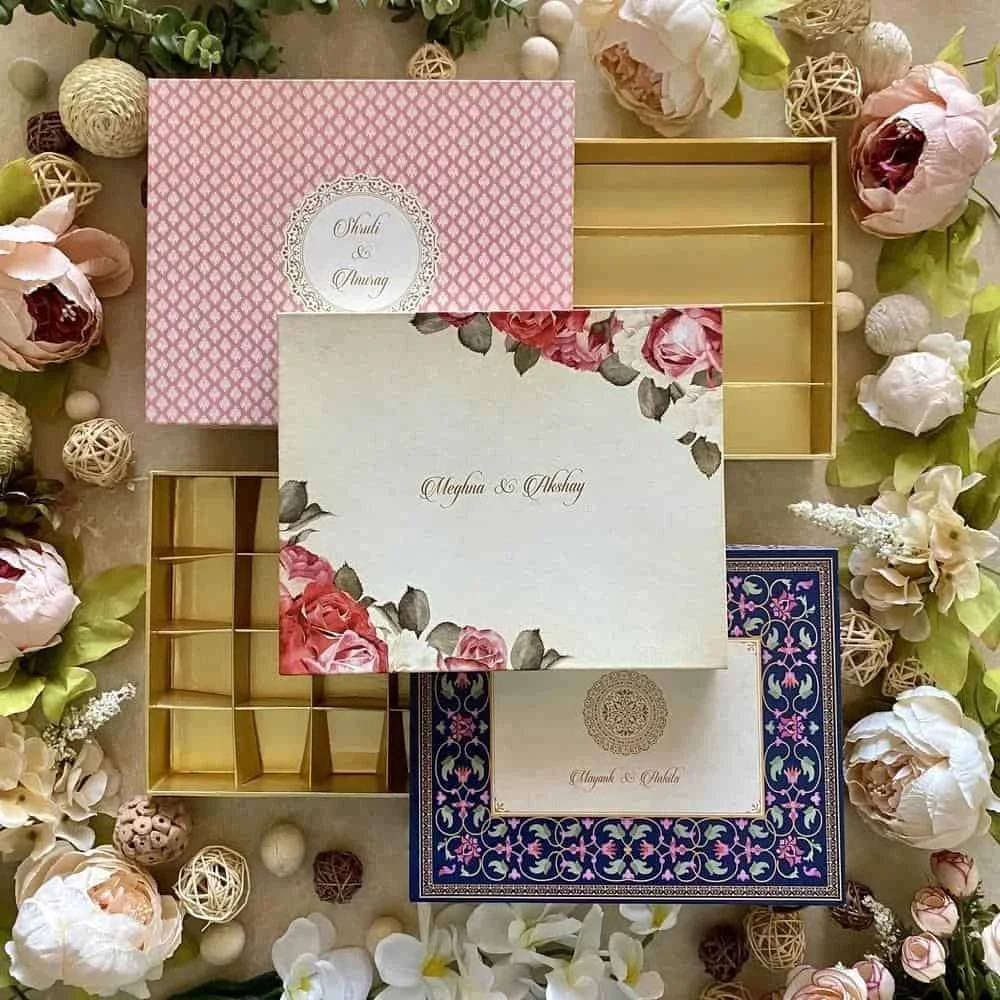
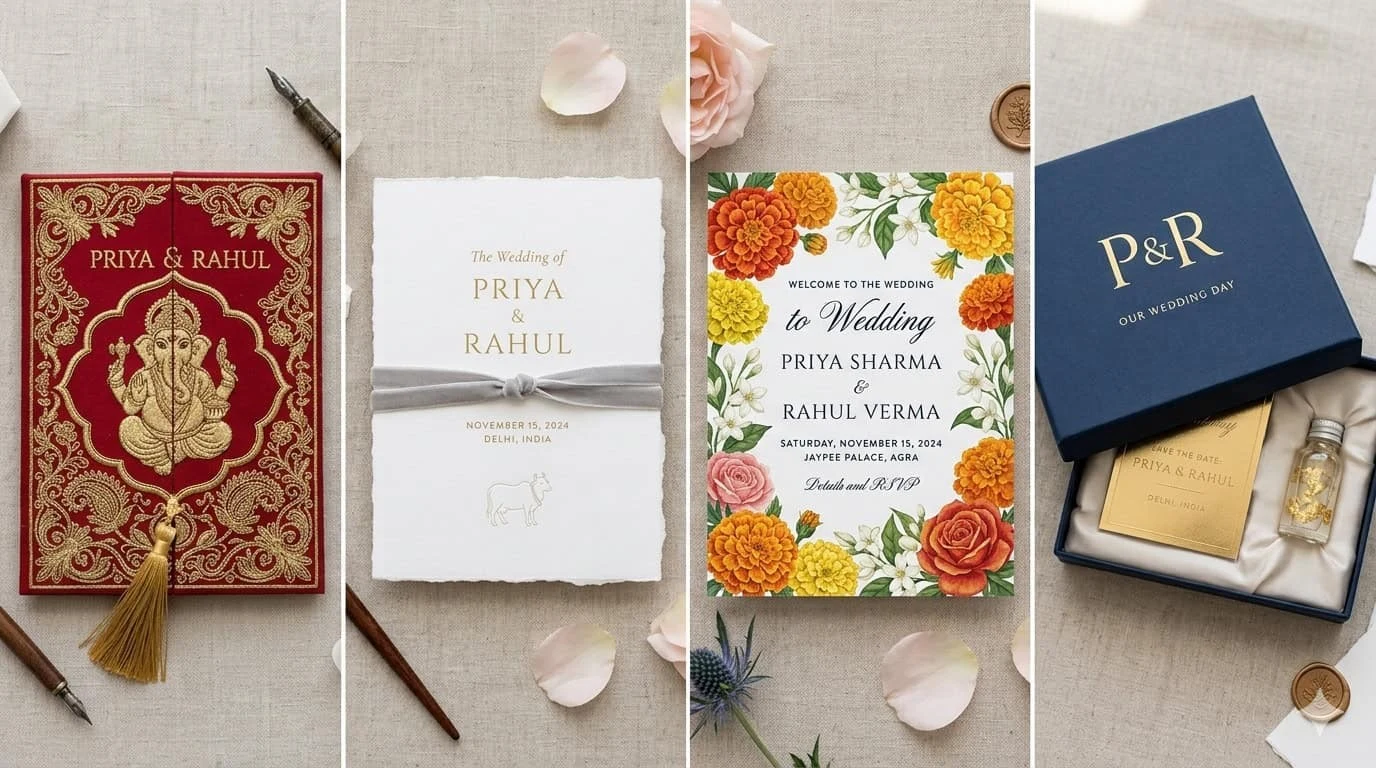
Traditional cards come in many forms. There are simple single-sheet cards, folded cards, scroll cards, boxed invitations, laser-cut designs and cards that go with sweets or dry fruits.
Why Indian Families Still Choose Physical Wedding Cards
Ask any parent, and you will hear the same thing: "Card dekar bulana chahiye." ("You should invite people by giving them a card.")
This is not an old-fashioned habit. It comes from real meaning.
The first card goes to God. In many homes, the first card is placed before Lord Ganesha or the family deity. The wedding work formally begins only after that. You cannot offer a WhatsApp forward at the mandir.
Going to someone's home to invite them shows respect. When the father of the bride goes to his elder brother's house with a card and a box of sweets, it says, "Your presence matters to us." A text message, however beautiful, cannot say that.
Elders feel properly invited. Many grandparents, uncles and aunts do not feel truly invited until they hold a card in their hands. For them, a digital invite can feel like a notice rather than an invitation.
The card becomes a memory. Years later, people find old wedding cards in a cupboard or an album. Phone galleries get cleared. Cards stay.
10 Reasons to Prefer Traditional Wedding Cards Over Digital Invitations
1. A Printed Card Shows Personal Respect
Choosing a card, writing each guest's name and visiting their home takes effort. Guests feel that effort. It tells them they are an important part of your big day and not just one more number in a contact list.
2. It Keeps Our Wedding Rituals Alive
The first card to God, cards given with sweets, and elders visiting relatives in person are all part of the celebration itself. A physical card keeps these traditions going for the next generation.
3. Elders Are Comfortable With It
Not everyone is at ease with smartphones. Some grandparents struggle to open a PDF, zoom into a video or find a message among 200 unread chats. A printed card is easy for everyone. Anyone can read it, keep it and show it to others.
4. It Doesn't Get Lost in the Phone
A digital invite arrives between good-morning messages, forwards and office groups. It is easy to miss, mute or forget. A printed card sits on the table or the fridge, and it reminds the family of your date every day.
5. It Becomes a Keepsake for Life
Couples frame their wedding card. Parents keep it in the family album. Children look at it years later. A physical card is part of your family history. Digital files rarely survive phone changes.
6. You Can Feel the Quality
A printed card engages the senses in a way a screen cannot. You can feel the texture of good paper, see gold foil shining, and run your finger over raised embossed letters. These details show care and taste before the guest has read a single word.
7. Endless Design Options
Printing offers far more than most people realise:
- Foil stamping adds shiny gold, silver or rose-gold details.
- Embossing gives raised patterns and letters you can feel.
- Die-cutting and laser-cutting create delicate jaali-style patterns and unusual shapes.
- Special paper, such as textured, handmade or metallic stock, gives a premium look.
- Boxed and scroll invitations make a royal first impression.
A card can reflect your family's taste, your region's culture or your wedding theme in a way a digital file cannot.
Looking for inspiration? See our wedding invitation ideas and designs.
8. It Sets the Tone of Your Wedding
The card is the first thing guests see of your wedding. A rich, well-made card tells them to expect a grand celebration. An elegant, minimal card suggests a classy, intimate event. The card creates excitement before the first function even begins.
9. It Carries Family Names With Pride
Indian wedding cards traditionally mention grandparents, parents and sometimes the wider family, with blessings and invitation lines. Parents feel proud to see their family name printed beautifully. It honours the people who made this day possible.
10. It Pairs Perfectly With Gifting
A card given with mithai, dry fruits or a small gift turns an invitation into a gesture. Many families also pick matching Shagun envelopes and gift packaging, so the whole wedding looks consistent and thoughtfully planned.
Digital Wedding Invitations: Where They Make Sense
To be fair, digital invitations have real advantages, and it helps to know them:
- Fast. You can send hundreds of invites in minutes.
- Low cost. There are no printing or delivery costs.
- Easy to update. If the venue or timing changes, you just send a new message.
- Reach anywhere. They work well for friends and relatives living abroad.
- Extras. You can add a Google Maps location link, music or a short video.
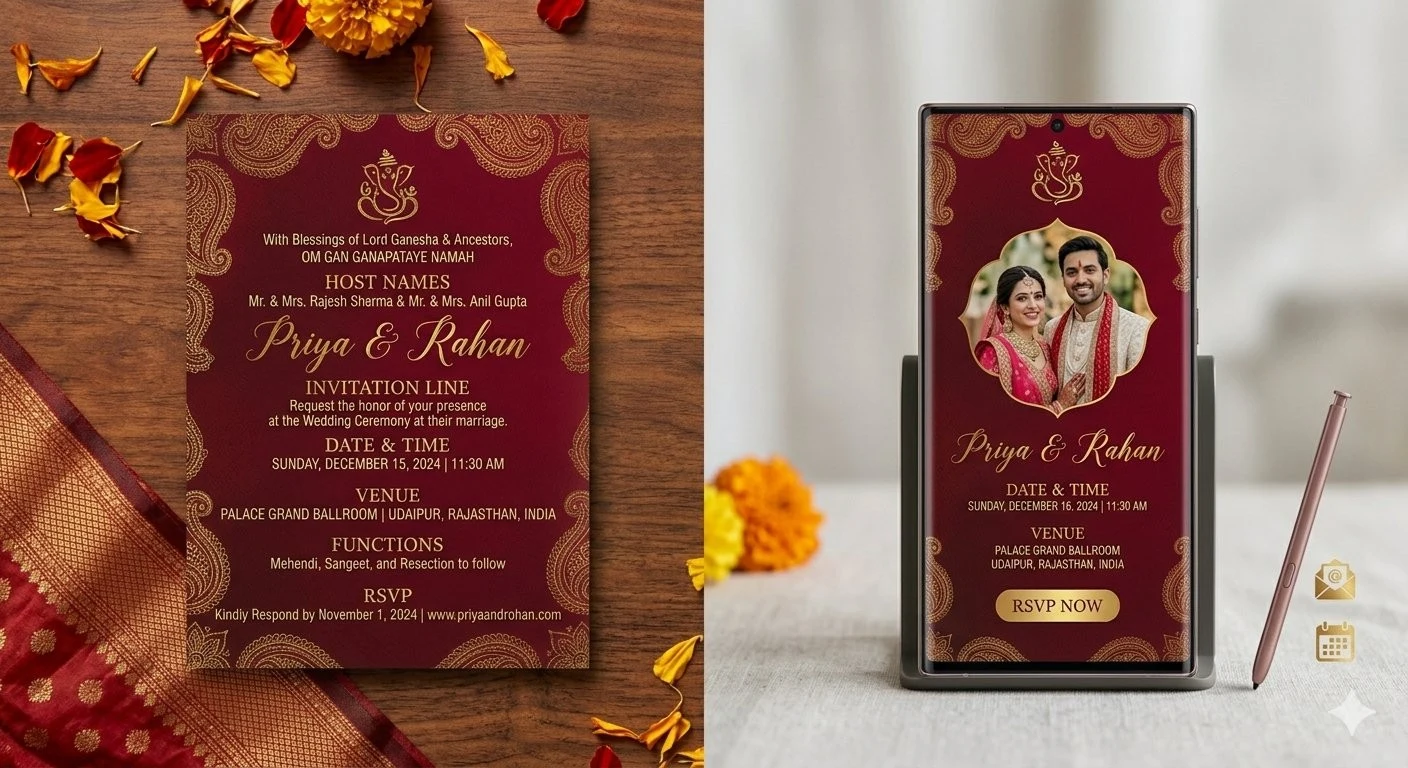
The limits are just as real. Digital invites can feel casual. They are easy to ignore. They don't work for rituals, and many elders don't consider them a proper invitation.
Physical vs Digital Wedding Cards: A Quick Comparison
| Factor | Physical Wedding Card | Digital Invitation |
|---|---|---|
| Emotional value | Very high; feels personal and respectful | Moderate; can feel casual |
| Suits rituals | Yes (first card to God, invitations given at home) | No |
| Comfortable for elders | Yes | Not always |
| Keepsake value | Lasts for years | Usually deleted or lost |
| Design and feel | Texture, foil, embossing, special shapes | Screen only |
| Cost | Higher | Low or free |
| Speed | Needs printing and distribution time | Instant |
| Last-minute changes | Difficult | Easy |
| Reaching distant guests | Needs courier or post | Instant, worldwide |
Advantages and Disadvantages at a Glance
Physical wedding cards
- Advantages: respectful, rooted in tradition, liked by elders, memorable, premium feel.
- Disadvantages: cost more, need planning time, can't be changed once printed.
Digital invitations
- Advantages: quick, cheap, easy to update, reach people anywhere.
- Disadvantages: feel less personal, easy to miss, not suitable for rituals, elders may feel ignored.
So, Which One Should You Choose?
For the main wedding invitation, a physical card is the better choice for most Indian families. It does the job that matters most: it makes your loved ones feel respected and truly invited.
Many families now use both, and this works well:
- Printed cards go to family, elders, close friends and important guests. Deliver them in person wherever possible.
- Digital invites go to colleagues, distant acquaintances and guests abroad.
- WhatsApp reminders are sent a few days before each function, with the venue location link.
This way, you keep tradition and respect where they matter, and use technology where it saves effort.
What to Include in a Physical Wedding Card
A well-planned card answers every question a guest might have. Here is a simple checklist:
- Religious symbols or blessings, such as Shri Ganeshaya Namah or a shloka, as per your tradition.
- Invitation line from the hosts, usually the parents or grandparents.
- Full names of the bride and groom, with their parents' names.
- Wedding date, day and muhurat time.
- Venue name and complete address. A QR code linked to the Google Maps location is very helpful.
- Function-wise details such as Haldi, Mehendi, Sangeet and Reception, with the date, time and venue for each. Separate insert cards keep this neat.
- Dress code or theme, if there is one.
- Contact numbers of one or two family members for directions or queries.
- RSVP details, if you need a headcount.
- Blessings lines, such as "With best compliments from" or the names of the children of the family, as per custom.
Tip: Get two people to proofread spellings, dates and names before printing. A mistake in a printed card can't be fixed with a click.
Tips for Choosing the Right Traditional Wedding Card
- Start early. Finalise the design two to three months before the wedding. Distribute cards four to six weeks before the first function.
- Order 10–15% extra. Last-minute guests always get added, and you will want a few cards as keepsakes.
- Set a per-card budget. Premium finishes like foil, boxes and laser-cutting add cost. Decide in advance what matters most to you.
- Ask for a physical sample. Colours and paper look different on a screen and in your hand.
- Match your wedding theme. Choose colours and style that suit your functions, décor and family taste.
- Think about delivery. Heavy boxed cards cost more to courier to other cities, so plan for outstation guests.
Frequently Asked Questions
Are traditional wedding cards still in trend?
Yes. Digital invites are common, but most Indian families still print cards for the main wedding, especially for elders and close relatives. Card designs are also more modern now, with minimal, premium and theme-based options.
Is it rude to send only a digital wedding invitation?
It depends on the guest. For friends and colleagues, a digital invite is usually fine. For elders and close family, a printed card delivered in person is seen as the respectful way to invite.
How early should wedding cards be distributed?
Ideally four to six weeks before the first function. For outstation guests, send cards six to eight weeks ahead so they have time to plan travel.
Can I use both a printed card and a digital invitation?
Yes, and many families do. Give printed cards to family and important guests, send digital invites to others, and use WhatsApp for reminders and location links.
How much do traditional wedding cards cost?
The price depends on paper, size, printing finishes, inserts and quantity. Affordable cards can start below Rs. 50, while boxed or laser-cut cards cost more. Ordering in bulk usually lowers the price per card.
Are physical wedding cards bad for the environment?
You can reduce it by choosing FSC-certified or recyclable paper, avoiding plastic, printing an accurate quantity and designing cards that people want to keep instead of throwing away.
Conclusion
Digital invitations are fast and practical, and they have their place. But when it comes to inviting the people who matter most, a printed card still does something a screen cannot. It shows respect, keeps family rituals alive, makes elders feel honoured and becomes a memory for life. That is why so many families still hold on to these reasons to prefer traditional wedding cards over digital invitations.
If you are planning your wedding, or your child's wedding, choose a card that truly represents your family. At Beyond Invitation, we design and print traditional wedding cards with foil, embossing, laser-cut and boxed finishes, along with matching Shagun envelopes. [Explore our collection] or [talk to us for a custom design].