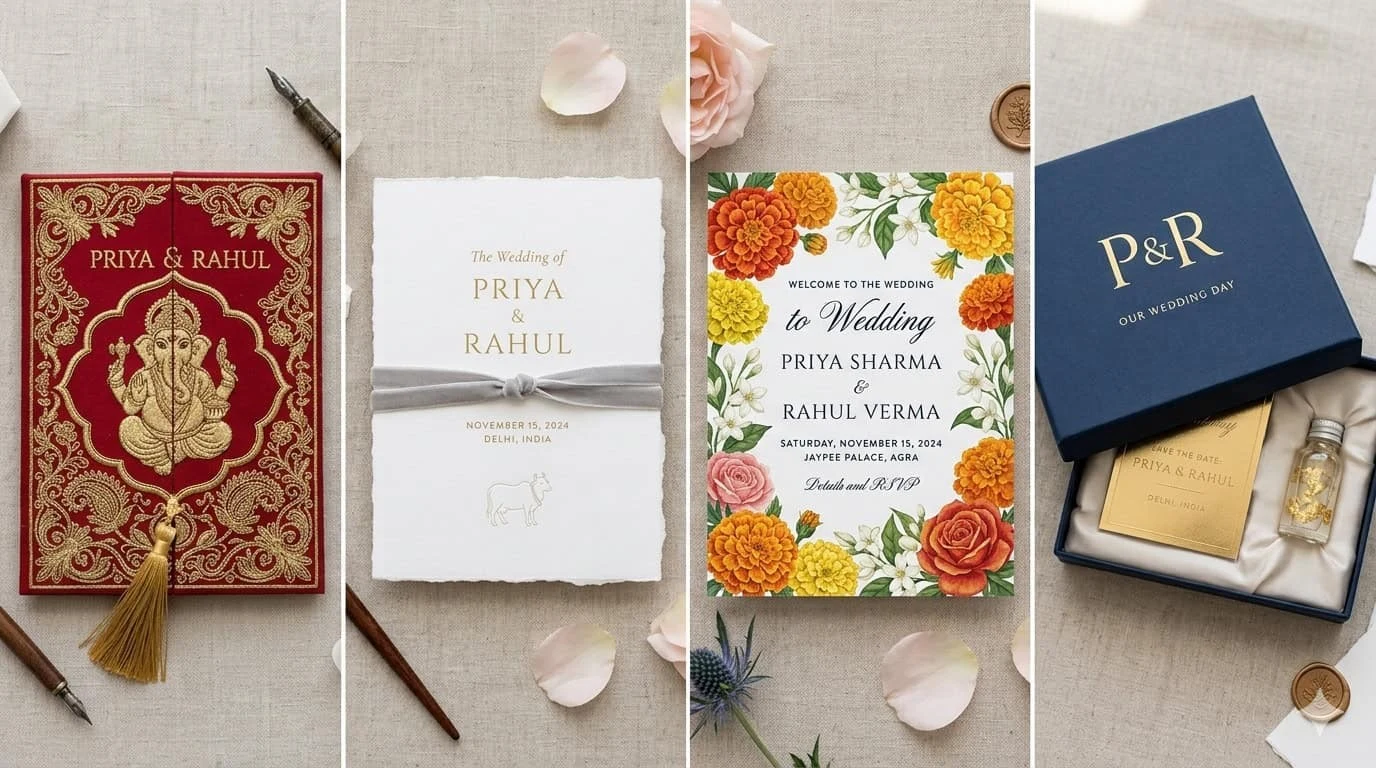
One common question couples and their parents ask is: When should we order wedding invitations, and how early should we send them to guests?
Order too late, and you may have to compromise on your preferred design or pay extra for urgent printing. Send invitations too early, and guests may forget the details. Send them too late, and relatives travelling from another city may struggle to arrange tickets and accommodation.
This is why having a proper Wedding Invitation Timeline matters.
Whether you are planning a traditional Indian wedding, a destination celebration or an intimate family wedding, this guide will help you understand when to select, order, print and distribute your wedding cards without unnecessary last-minute stress.
What Is a Wedding Invitation Timeline and Why Does It Matter in India?
A Wedding Invitation Timeline is a schedule that explains when to complete each stage of your wedding invitation process, from selecting the design to delivering the final cards to guests.
In India, wedding invitations are more than formal announcements. They represent two families coming together and often include details of several celebrations
Unlike a simple one-day event invitation, Indian wedding cards may require multiple inserts, different venue addresses and details in more than one language.
A planned timeline helps you:
- Avoid printing delays: Allow enough time for design approvals, corrections and printing.
- Manage your budget: Avoid unnecessary express printing and last-minute delivery charges.
- Coordinate both families: Give everyone time to review names, dates and ceremony details.
- Help guests prepare: Allow outstation relatives to arrange tickets, accommodation and leave.
- Prevent mistakes: Check spellings, timings and venue addresses before printing.
Most importantly, planning ahead allows you to enjoy choosing your wedding invitations rather than treating them as another last-minute responsibility.
Wedding Paper Timeline: Quick Reference Month by Month
Here is a quick overview of when to plan each stage of your wedding stationery.
| Timeline | What You Should Do |
|---|---|
| 6–8 months before | Finalise wedding dates, estimate guest count and explore invitation designs |
| 4–5 months before | Finalise card design, wording, paper and printing requirements |
| 3–4 months before | Send save-the-dates to local guests |
| 2–3 months before | Review samples, approve proofs and prepare guest lists |
| 6–8 weeks before | Distribute formal invitations to outstation guests |
| 4–6 weeks before | Distribute wedding cards to local guests |
| 2–3 weeks before | Complete RSVP follow-ups and confirm guest numbers |
| 1–2 weeks before | Prepare day-of stationery and share final event details |
| 2–6 weeks after | Send thank-you messages or cards |
These are suggested planning windows. Adjust them according to your wedding dates, printing requirements and guest locations.
Why Wedding Invitation Timing Matters More Than You Think
Many couples spend months planning their venue, outfits and decorations but leave wedding invitations until the last few weeks.
Consider this situation: You finalise a customised invitation with gold foil printing and multiple inserts. Your family requests changes to the wording, one venue address is still pending, and the printer needs additional time for production.
Suddenly, you have very little time left to distribute the cards.
This is particularly challenging for Indian families, where invitations are often delivered personally to relatives, family friends and colleagues.
Three factors make timing important:
-
Customised cards require preparation: Design revisions, paper selection, printing, embellishments and packaging all take time.
-
Guests need time to plan: Relatives travelling from other cities may need to book tickets, request leave and arrange accommodation.
-
Families need time to distribute cards: Both families may have separate guest lists, and personally inviting everyone can take several days or weeks.
Starting early helps you manage all three without unnecessary pressure.
Your Wedding Invitation Journey: Step by Step
Let's understand the five important stages of your wedding invitation journey.
Step 1: Save the Dates (3–6 Months Before the Wedding)
A save-the-date is an early announcement informing guests about your upcoming wedding. Unlike a formal invitation, it does not need to include every ceremony or venue detail. Its main purpose is to help guests reserve the date.
When should you send save-the-dates?
- Local guests: 3–4 months before the wedding.
- Outstation guests: 4–6 months before.
- International guests or destination weddings: 6–9 months before.
Informing guests early is especially helpful during busy Indian wedding seasons.
What should you include?
- Bride's and groom's names
- Wedding date
- Wedding city
- A short "Save the Date" message
- A note mentioning that the formal invitation will follow
Printed or digital save-the-dates?
Both work well. Digital announcements are convenient for WhatsApp and email, while printed versions are a lovely option for close relatives.
Many couples use digital save-the-dates for early communication and printed invitations for the formal announcement.
If you're planning a multi-day Indian wedding or inviting guests from different cities, sending a save-the-date gives them enough time to make travel arrangements. You can also explore these Indian wedding save-the-date ideas and wording
Step 2: Formal Wedding Invitations (4–8 Weeks Before the Wedding)
This is when guests receive the complete details of your wedding celebrations.
When should you send formal wedding invitations?
- Local guests: 4–6 weeks before the first wedding function.
- Outstation guests: 6–8 weeks before.
- International guests: 8–12 weeks before, or earlier if travel arrangements require it.
- Destination weddings: Around 3–4 months before.
For Indian weddings, calculate the timeline from your first major function, not just the wedding ceremony.
For example, if your Haldi is on 10 February and your wedding is on 12 February, guests need to know about the celebrations before 10 February.
What should your formal wedding invitation include?
Before sending your cards for printing, check that all essential details are included:
- Bride's and groom's names
- Parents' names, where appropriate
- Wedding date and day
- Ceremony names and timings
- Complete venue addresses
- Reception details
- RSVP contact information
- Dress code, if required
- Accommodation or travel information, if relevant
If your wedding has multiple functions, consider using separate insert cards instead of putting everything on one card.
Your wedding invitation should clearly mention the names of the couple, wedding date, venue, ceremony timings and other important details. Before finalising the design, take a look at this wedding invitation wording and etiquette guide.
A tip for parents: Ask both families to review the final invitation wording, names and event details before approving the design. One final check can prevent unnecessary reprinting.
Step 3: RSVP Deadline and Follow-Up (2–3 Weeks Before the Wedding)
RSVP stands for Répondez s'il vous plaît, meaning "Please respond."
It helps you understand which guests will be attending your wedding and plan arrangements accordingly.
When should you set your RSVP deadline?
For local weddings, request confirmation around 2–3 weeks before the first function. For destination weddings, ask guests to confirm earlier, ideally 6–8 weeks before, so you have time to arrange accommodation and transportation.
How should you follow up?
- Call close relatives personally.
- Send polite WhatsApp reminders to friends and extended family.
- Confirm arrival and departure dates with travelling guests.
- Check how many family members will attend.
- Ask whether guests need accommodation or transportation.
Maintain a simple guest list with three categories: confirmed, not confirmed and unable to attend.
This information helps you finalise catering quantities, seating arrangements, accommodation, transportation and wedding favours.
Step 4: Day-of Stationery (1–2 Weeks Before the Wedding)
Wedding stationery does not end with the invitation card. Several additional items can make your celebrations more organised and visually coordinated.
Depending on your wedding plans, you may need:
- Welcome boards and entrance signage
- Wedding programmes or event schedules
- Seating and table cards
- Menu cards
- Place cards
- Gift and favour tags
- Directional signs
When should you order day-of stationery?
Ideally, finalise and order customised stationery around 4–6 weeks before the wedding. Keep the final 1–2 weeks for checking quantities, delivery and placement.
Should it match your wedding invitation?
It is not compulsory, but using similar colours, fonts, floral patterns or monograms creates a coordinated look across your wedding stationery.
Step 5: Thank You Cards (2–6 Weeks After the Wedding)
Once the celebrations are over, thank the people who made your special day memorable.
Thank-you cards are a thoughtful way to appreciate guests who attended your wedding, travelled long distances or sent their blessings and gifts.
When should you send them?
You can send thank-you cards within 2–6 weeks after the wedding.
Keep your message warm and personal. For example:
"Thank you for being a part of our special day. Your presence, blessings and love made our wedding celebrations even more memorable. We are grateful to have shared these beautiful moments with you."
You can send printed cards to close family and friends or personalised digital messages to other guests.
When and How to Order Your Wedding Invitations
Knowing when to send wedding invitations is important, but knowing when to place your order is equally essential.
Ideally, start the ordering process around 10–14 weeks before you plan to distribute your formal invitations. For elaborate customised invitations, begin even earlier.
Here are five steps to follow.
1. Finalise Your Guest List
Prepare separate guest lists for the bride's and groom's families, friends, relatives and colleagues.
Remember that one invitation card is often shared by an entire household rather than given to every individual guest.
For example, a family of four may require only one invitation. Also, order a few additional cards for last-minute additions and personal keepsakes.
2. Choose Your Wedding Invitation Design
Explore designs that match your wedding style and budget.
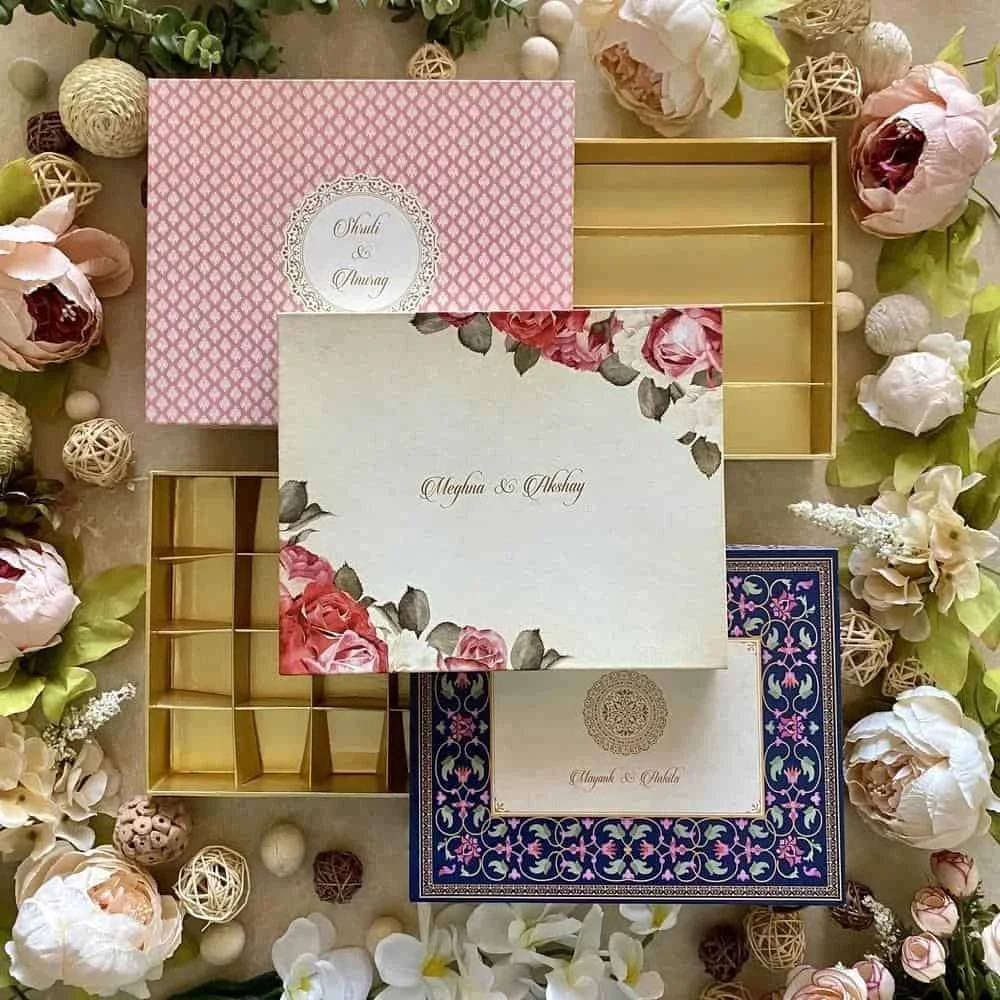
Popular options include:
- Traditional Indian wedding cards
- Royal invitation boxes
- Minimalist and elegant invitations
- Floral and pastel designs
- Contemporary illustrated invitations
Consider the paper quality, envelope, number of inserts and embellishments before finalising your design.
3. Finalise Wording and Event Details
Confirm the spelling of names, wedding dates, ceremony timings, venue addresses, RSVP numbers and traditional wording.
If your invitation includes Hindi, Sanskrit or another regional language, ask someone familiar with that language to review the final text.
4. Approve the Sample Before Printing
If your printer offers a physical sample, check the paper quality, colour, font readability, foil printing, alignment, envelope and overall finishing.
Colours on a computer screen may look different from the final printed card. Reviewing a sample helps identify problems before the complete order is printed.
5. Keep Time for Printing and Delivery
Ask your printer for a clear production and delivery schedule. Simple invitations may take less time than customised boxes involving multiple inserts, ribbons or special finishing.
If you are ordering from another city, allow additional time for shipping.
Important: Do not schedule card distribution for the same day you expect delivery. Keep a buffer to check quantities, sort invitations and identify any printing or delivery issues.
What to Do If You're Running Late?
Sometimes wedding planning does not go according to schedule. If your invitations are delayed, these steps can help:
-
Finalise essential information first: Avoid spending too much time comparing designs. Prioritise names, dates, venues and ceremony timings.
-
Consider digital invitations: Share digital invitations immediately if printed cards will take longer.
-
Speak to your printer: Ask about actual production time and available options instead of assuming every customised design can be printed urgently.
-
Prioritise travelling guests: Contact outstation and international relatives first so they can arrange tickets and accommodation.
-
Distribute invitations in phases: Start with close relatives and important guests, followed by local friends, neighbours and colleagues.
-
Keep communication simple: If printed cards are delayed, share complete event details through WhatsApp so guests are informed on time.
Common Wedding Invitation Timing Mistakes and How to Avoid Them
Here are some mistakes couples and families should avoid when planning their invitations.
1. Ordering cards too late
Customised invitations take time to design and print.
Solution: Start exploring designs 4–5 months before the wedding and place your order well in advance.
2. Waiting for every detail to be finalised
One pending function or venue detail can delay the entire process.
Solution: Finalise the main wedding details first and communicate smaller updates separately if necessary.
3. Forgetting extra cards
Ordering exactly the estimated quantity can create problems when additional guests are added.
Solution: Consider ordering around 5–10% extra, depending on your guest list and printing requirements.
4. Not checking the final proof
Incorrect spellings, dates or addresses can affect the entire order.
Solution: Ask both families to review the final design before approving printing.
5. Sending invitations too late to travelling guests
Outstation relatives need additional time for travel arrangements.
Solution: Send save-the-dates early and distribute their formal invitations before local guests.
6. Not tracking card distribution
Some relatives may accidentally be missed when both families distribute invitations.
Solution: Maintain a shared guest list and update it whenever an invitation is delivered.
Frequently Asked Questions About Wedding Invitation Timelines
1. How many months before a wedding should you order wedding invitations?
Ideally, start exploring designs 4–5 months before the wedding and place your order around 3–4 months before. Customised invitation boxes may require additional time.
2. How early should you send wedding invitations in India?
Send formal invitations to local guests around 4–6 weeks before the first function. Outstation guests should receive them 6–8 weeks in advance, while international guests may need 8–12 weeks or more.
3. Is 2 months too early to send wedding invitations?
No. Sending invitations two months before the wedding is perfectly reasonable, especially when guests are travelling from other cities.
4. When should I send save-the-dates for an Indian wedding?
Send them 3–4 months before for local guests, 4–6 months before for outstation guests and 6–9 months before for international or destination wedding guests.
5. How many extra wedding invitation cards should I order?
Ordering around 5–10% extra is a practical starting point. Your final quantity should depend on the guest list, number of households and possibility of last-minute additions.
6. Should wedding invitations be sent before or after the engagement?
There is no compulsory rule. If your wedding date is confirmed, you can share a save-the-date before or after the engagement. Send formal invitations once the important wedding details are finalised.
7. Should I send digital invitations along with printed wedding cards?
Yes. Printed cards are suitable for close relatives and family members, while digital invitations make it easier to reach friends, colleagues and guests living in different cities.
8. When should I send wedding invitations for a destination wedding?
Inform guests around 6–9 months in advance. Send the complete formal invitation approximately 3–4 months before the wedding so they can arrange travel and accommodation.
9. What is the difference between a Wedding Invitation Timeline and a Wedding Card Timeline?
A Wedding Invitation Timeline covers the complete process of planning and communicating invitations, including save-the-dates, formal invitations, RSVPs and reminders.
A Wedding Card Timeline focuses more specifically on selecting, designing, ordering, printing and distributing physical wedding cards. Planning both together helps prevent delays.
Conclusion
Your wedding invitation is one of the first things guests receive before the celebrations begin. It introduces your wedding, brings both families together and gives loved ones an opportunity to prepare for the special occasion.
Whether you prefer a traditional invitation, a luxurious customised card or a simple modern design, the key is to start early and follow a proper Wedding Invitation Timeline.
Give yourself enough time to explore designs, finalise the wording, approve samples and receive your printed invitations. Remember to plan for travelling guests, order extra cards and coordinate distribution between both families.
With the right planning, choosing and distributing your wedding invitations can become an enjoyable part of your wedding journey rather than a last-minute responsibility.